
POST MORTEM GRAFF2LIFE
Joining my first game jam wasn’t an easy decision.
I hesitated for a long time… a really long time.
The theme, Street Art & Graffiti, appealed to me, but the idea of creating a game in just a few days with my level of experience felt almost impossible.
Eventually, I told myself:
“At worst, if I don’t finish, at least I’ll have tried.”
And with that mindset, Graff2Life was born.
The story of my very first video game




URBAN JAM
THE IDEA
The inspiration for Graff2Life didn’t appear out of nowhere.
A few weeks before the jam, I had made a small prototype using a black-and-white comic-style post process.
I loved the mood so much that I wanted to reuse it for something more meaningful.
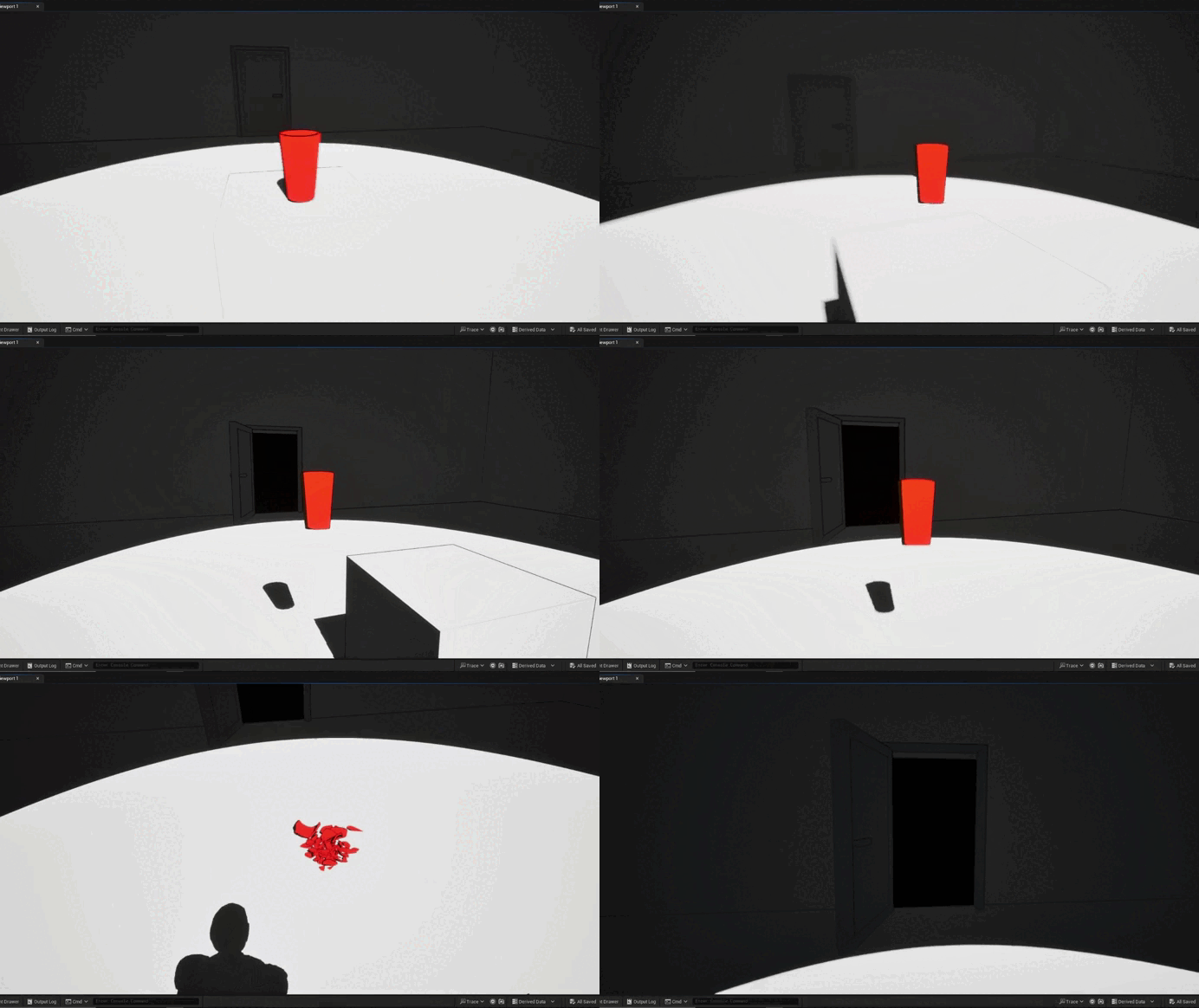
Then the idea finally clicked:
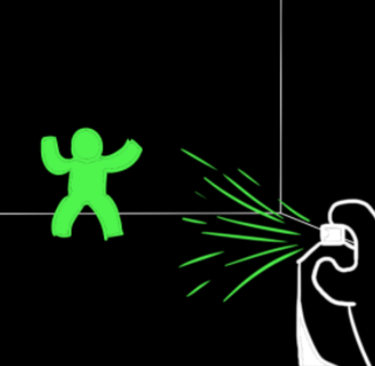
Characters drawn on the walls… coming to life when you paint them.
A silent monochrome neighborhood.
And a soundtrack that builds itself, instrument by instrument, as the street wakes up.
The goal was never to create complex gameplay, but to deliver a feeling.
A city taking its first breath again.

MUSIC
The music of Graff2Life quickly became the heart of the entire project.
Everything ended up depending on it : the characters, their animations, the atmosphere...
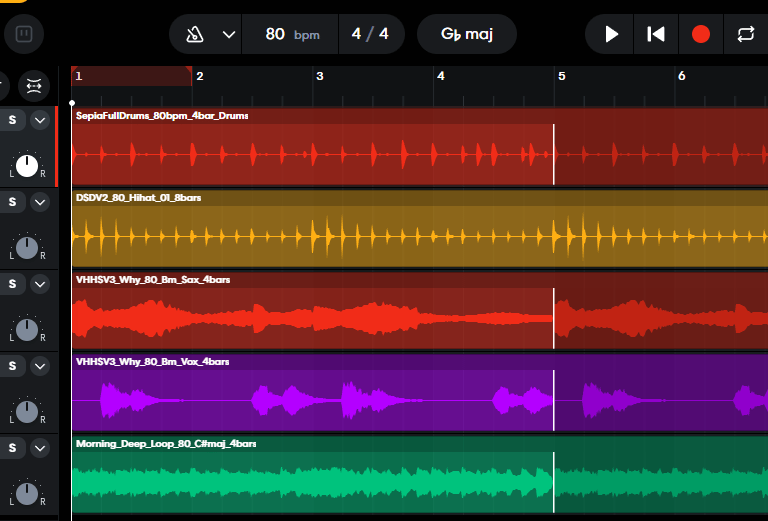
I needed a soundtrack that felt calm and atmospheric, but also modular, because each character would add its own small musical piece when painted.
The street wouldn’t just change visually : it would sound more alive with every step.
The only problem was that I had never made music before.
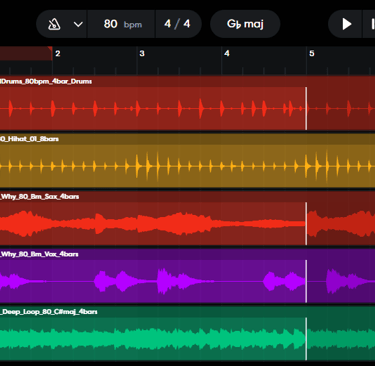
So I opened BandLab and started learning on the fly. No theory, no method... just experimenting.
I created a simple base loop, then built small motifs for each character : a bass hit, a sax phrase, a little ambient texture, even a weird cat vocal.
Alone, these loops didn’t sound like much.
But together, they formed a track that could grow naturally as the player woke up the neighborhood.
Because the music was the foundation, everything else had to follow it.
CHARACTERS
The characters of Graff2Life were born from a simple idea :
Graffiti that doesn’t just sit on the wall — it reacts, moves, and brings the street back to life.
drew all the characters by hand.
They weren’t overly detailed or polished, but they had something more important : a personality that fit the mood of the game.
Rough lines, sketchy silhouettes, the kind of figures you’d expect to find on an old brick wall in a forgotten alley.
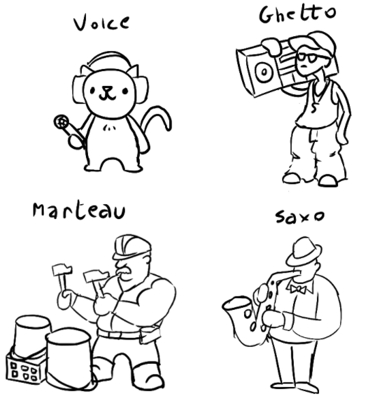
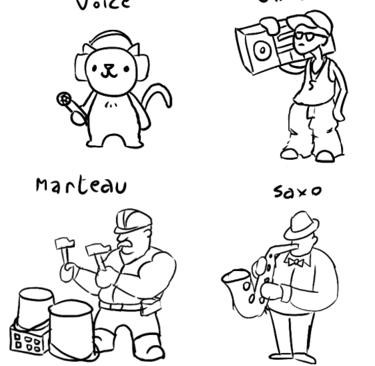
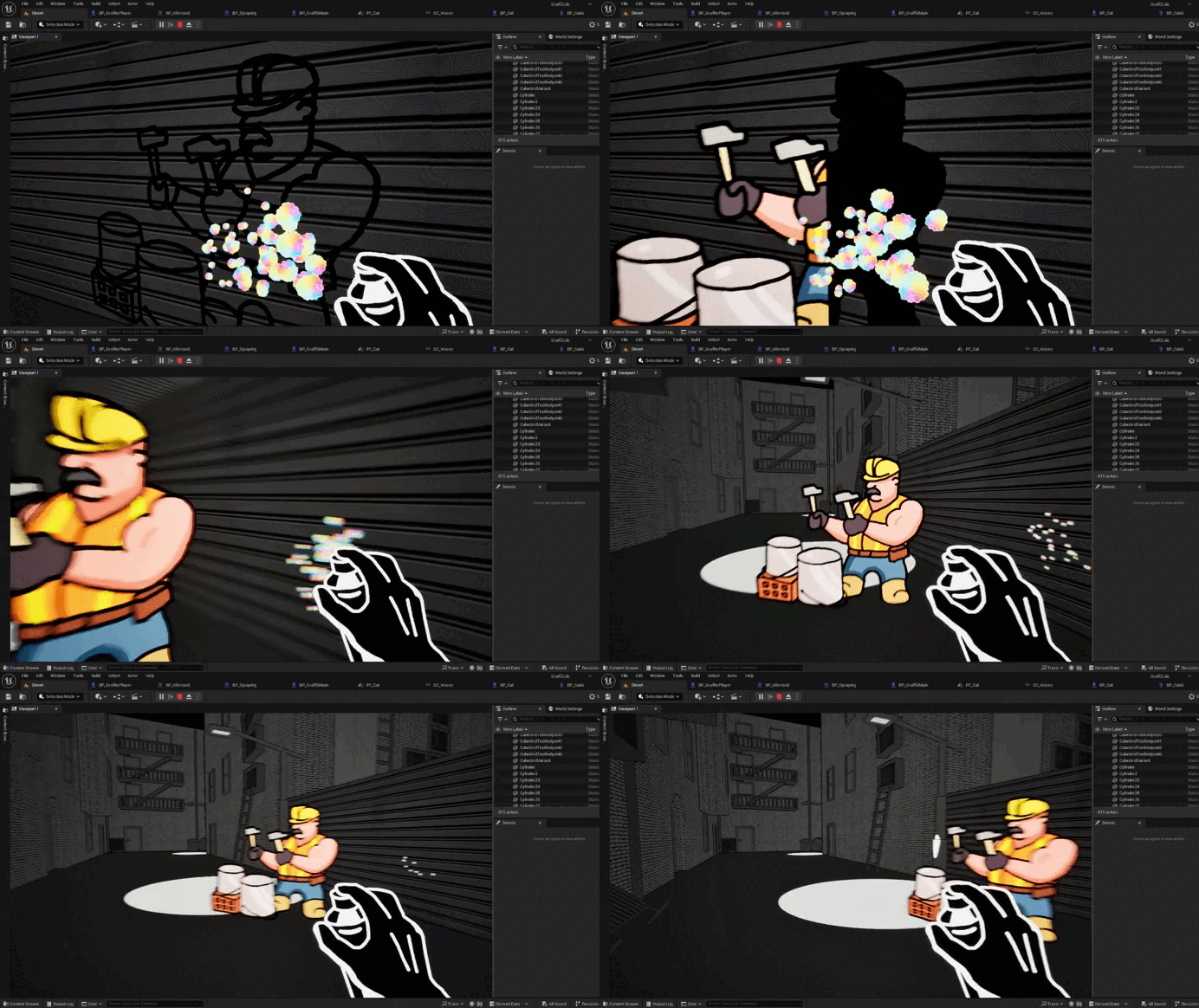
At the start of the game, they appear as static drawings : quiet, frozen, almost invisible in the monochrome neighborhood.
But once the player paints them, everything changes.
Each character “wakes up” with a small flipbook animation.
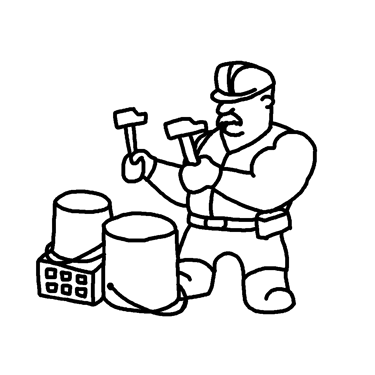
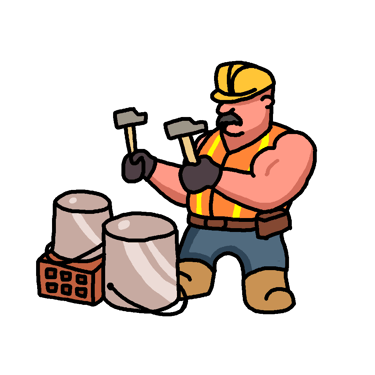
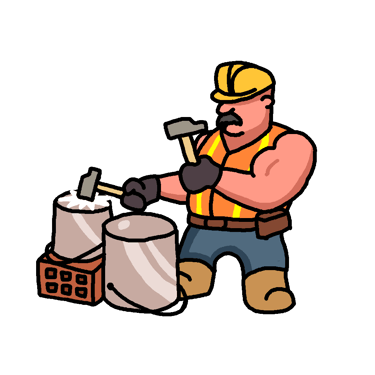
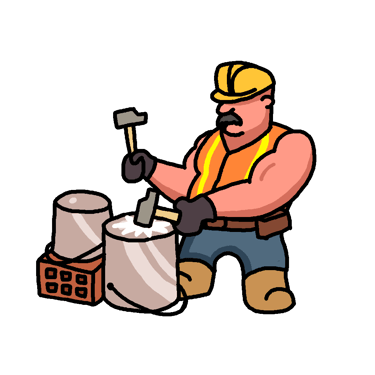
I had to learn how to animate them on the spot, and synchronizing their movements with the music became one of the trickiest challenges of the project.
Every frame had to match a beat, a measure, or a moment in the soundtrack.
It was a mix of BPM calculations, timing tests, and a lot of trial and error.
But when everything finally aligned, the animation, the colors, the instrument they added to the track, they felt alive in rythm.
These characters aren’t NPCs in the traditional sense.
They are the heartbeat of the game.
BUILDING THE WORLD
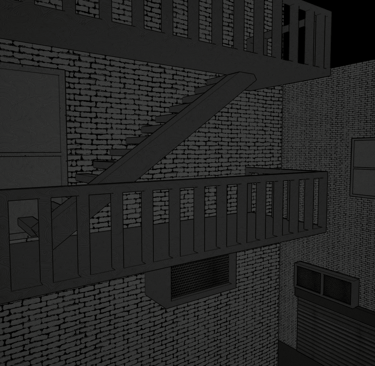
Creating the world of Graff2Life was an exercise in simplicity.
With just one week to build everything, I couldn’t afford detailed environments or complex modeling.
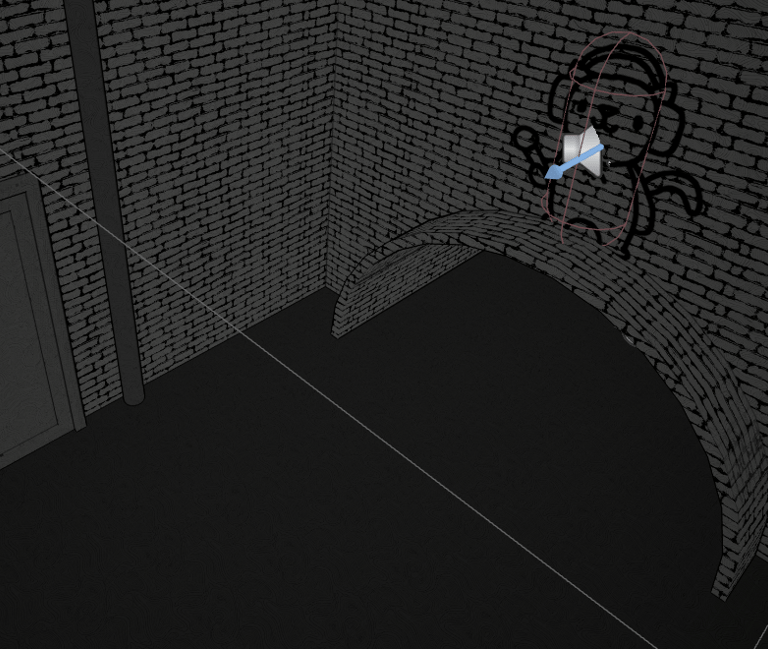
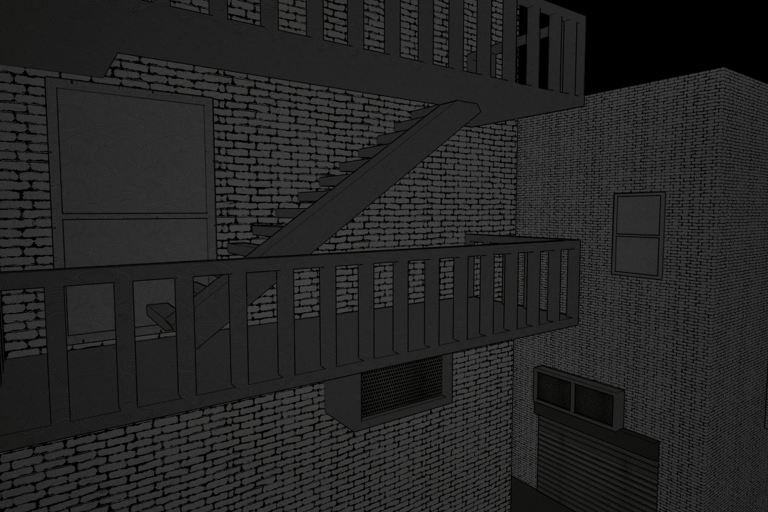
Most of the level was assembled directly inside Unreal Engine using primitive shapes : cubes, cylinders, stretched planes, and whatever I could put together quickly to form alleys, walls, pipes, fences, and small architectural details.
I did make a few assets in Blender, but the majority of the neighborhood was built from scratch inside the engine, piece by piece.
The black-and-white post-process did a lot of the heavy lifting.
Because of it, I barely had to texture anything.
Even the roughest meshes blended naturally into the style, turning simple geometry into something that looked intentional.
In the end, the environment wasn’t complex, but it didn’t need to be.
The mood, the lighting, and the monochrome look carried the atmosphere, letting the characters and the music be the center of attention.
Sometimes limitations force you into solutions that fit better than the original plan, and this little neighborhood is the perfect example of that.

WHAT I LEARNED
Graff2Life may be a small project, but it taught me a surprising amount in just one week.
I learned that simple ideas can become meaningful when you fully embrace them. That you don’t need complex systems or advanced skills to create an atmosphere : a mood, a few shapes, and a clear intention are enough.
I learned that tools I had never touched before, like BandLab, can become part of a project if I’m willing to jump in and experiment.
I learned that animation, timing, sound, and visuals can all fit together, even when you’re figuring things out as you go.
I learned the value of limitations : how they push you toward creative solutions instead of perfect ones.
And above all, I learned how important it is to finish something.
No matter the scale, no matter the imperfections.
Completing this game gave me more confidence than any tutorial or prototype ever did.
Graff2Life isn't my biggest project, but it’s the one that showed me I could turn an idea into a finished experience.
And that’s something I’ll carry into every project that comes next.
CONCLUSION
I started Graff2Life unsure of what I was capable of.
I finished it realizing I could do more than I thought.
This game may be tiny, but it changed the way I see my own work.
For a first project, that was already enough.
And then I released it on itch.io.
It didn’t make a lot of noise : just a few downloads, a few views.
But someone left a comment that stayed with me :
It was just a single message, but for my first finished game,
it meant more than the ranking of the jam.
Sometimes, one person enjoying what you made is all you need to keep going.
Graff2Life is small, imperfect, and simple, but it’s the game that made me want to keep creating.
"Damn. The art style is peak. I would love to see a full game with story and everything. Great job guys !"